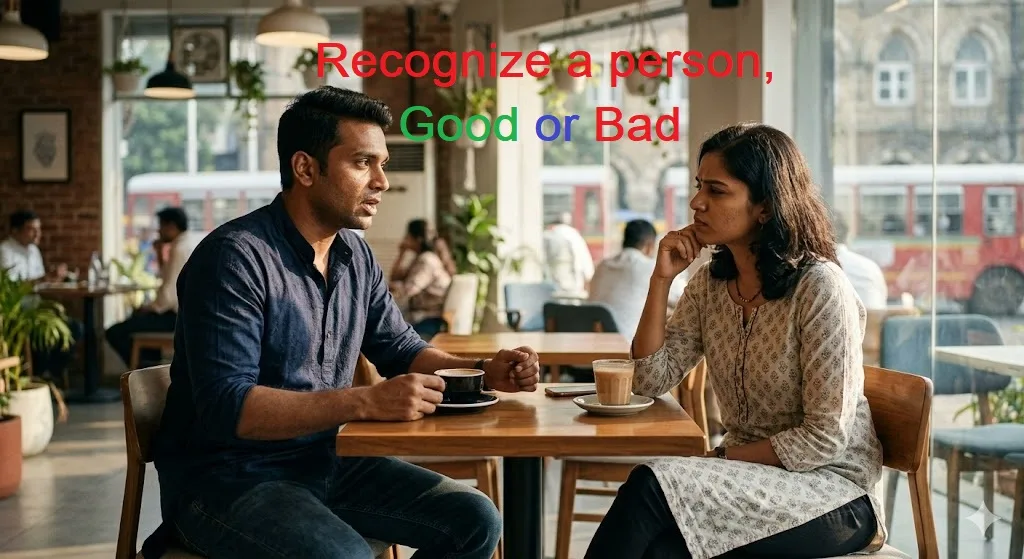
It’s may not be always accurate for us (or fair) to recognize people Good or Bad and label someone as simply “good” or “bad.” Most people are a mix of strengths and weaknesses. Instead of judging the whole person, it’s more useful to evaluate their behavior, patterns, and impact on you and others.
Here’s how you can identify whether someone’s influence is generally positive or harmful, Recognize a person, Good or Bad:
1. Observe Their Actions (Not Just Words)
-
- Do they keep promises?
-
- Do their actions match what they say?
-
- Are they consistent over time?
A trustworthy person shows consistency. Someone who frequently lies, manipulates, or breaks commitments may be harmful.

2. Notice How They Treat Others
-
- Are they respectful to people who can’t benefit them?
-
- Do they show kindness to strangers, service staff, or animals?
-
- Do they gossip or enjoy others’ failures?
How someone treats people with less power often reveals their true character.

3. Look at Their Intentions
-
- Do they help without expecting something in return?
-
- Are they supportive of your growth?
-
- Do they compete in unhealthy ways?
Good-hearted people generally want mutual growth, not control.

4. Watch for Red Flags
-
- Some warning signs:
-
- Constant blaming of others
-
- Extreme jealousy or possessiveness
-
- Lack of empathy
-
- Manipulation or guilt-tripping
-
- Disrespecting boundaries
One mistake doesn’t define someone—but repeated harmful behavior is important.

5. How Do You Feel Around Them?
-
- Your emotional response matters.
-
- Do you feel safe, valued, and relaxed?
-
- Or anxious, drained, and insecure?
Your body and emotions often sense patterns before your mind fully understands them.

6. Everyone Has Flaws
-
- A “good” person:
-
- Admits mistakes
-
- Apologizes sincerely
-
- Tries to improve
-
- A harmful person:
-
- Avoids responsibility
-
- Repeats the same hurtful actions
-
- Justifies bad behavior

Important Reminder
No one is 100% good or 100% bad. Focus on:
Patterns, not one-time events
Accountability, not perfection How they consistently impact your well-being